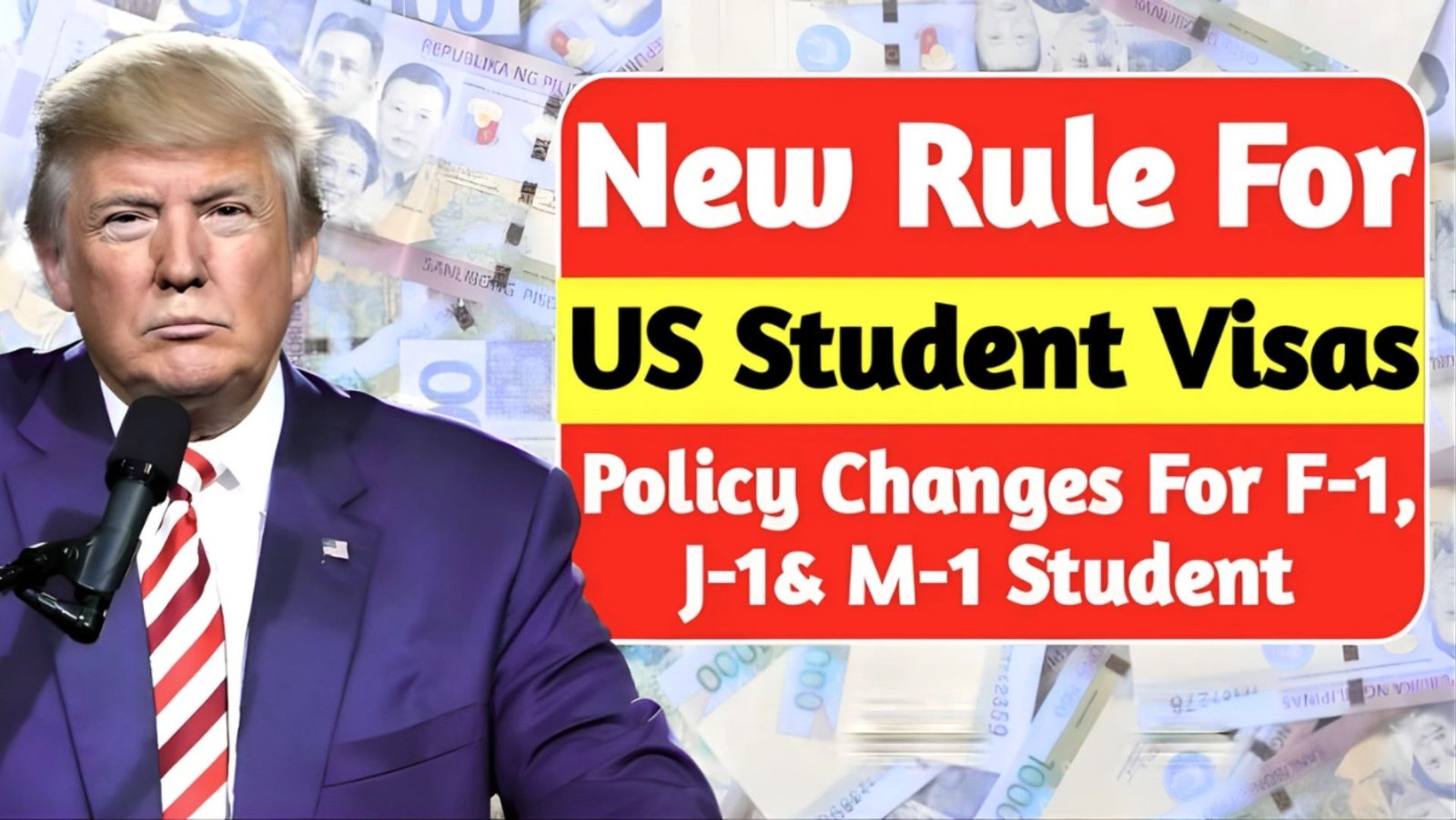
Hey there, dream-chaser! Picture this: You’ve aced your exams, snagged that acceptance letter to your top U.S. university, and you’re buzzing about the adventures ahead. Then, out of nowhere, President Trump drops a policy bombshell that could cap your stay at just four years. If you’re eyeing F-1, J-1, or M-1 student visas, this new rule for U.S. student visas is shaking up everything.
Why care? It impacts millions of international students chasing degrees and careers in America. In this post, we’ll unpack the changes, share insider tips, and help you stay ahead. Ready to dive in and secure your future? Let’s scroll!
What Are Trump’s New Student Visa Rules?
Trump’s latest announcement targets F-1 academic, J-1 exchange, and M-1 vocational student visas with a major overhaul. The big shift? A fixed four-year cap on stays, ditching the old “duration of status” flexibility. Grace periods shrink from 60 to 30 days post-graduation, and Optional Practical Training (OPT) faces restrictions or elimination. Transfers between schools get tougher, especially for grads. It’s all about curbing “visa abuse,” per the White House.
The Backstory: Evolution of U.S. Student Visas
U.S. student visas trace back to the 1952 Immigration Act, booming in the ’80s with global education pushes. F-1 launched for academics, J-1 for exchanges, M-1 for vocations. Past tweaks, like post-9/11 scrutiny, tightened rules. Trump’s first term eyed similar curbs, but 2025’s proposal is the boldest yet – aiming to prioritize American jobs amid economic pressures.
Why These F-1, J-1, and M-1 Changes Matter Now
In a post-pandemic world, international students pump $45 billion into the U.S. economy yearly. These Trump student visa changes could slash that, hitting universities and innovation hard. For you? It means planning tighter timelines and proving ties abroad. With elections looming, this policy tests America’s welcome mat for global talent.
How International Students Can Adapt and Benefit
Don’t panic – pivot! Apply early, choose programs under four years, and explore OPT alternatives like H-1B paths. Build strong U.S. networks for post-study gigs. Pro: Forces focused studies. Con: Limits research depth. Here’s a quick comparison:
| Aspect | Old Rules | New Rules (Proposed) |
|---|---|---|
| Stay Duration | Duration of status (unlimited with extensions) | Fixed 4 years max |
| Grace Period | 60 days post-completion | 30 days |
| OPT Access | Up to 3 years for STEM | Restricted or ended |
| School Transfers | Flexible for undergrads | Limited, especially grads |
Eye-Opening Stats on Student Visas
Over 1 million F-1/J-1/M-1 visas issued yearly pre-2025. Now? Expect a 20-30% drop if enacted. Fun fact: 75% of Silicon Valley startups have immigrant founders – many via student visas. Check these highlights:
| Stat | Figure | Source Insight |
|---|---|---|
| Annual Economic Boost | $45B | NAFSA Report |
| Projected Visa Decline | 25% | DHS Estimates |
| Top Visa Users | India/China (60%) | State Dept Data |
Expert Advice for Navigating the Shift
Immigration pros say: Document everything – from academics to finances. Consult SEVIS-approved advisors early. “Focus on employability; these rules reward the prepared,” notes visa expert Maria Lopez. Bonus tip: Hybrid programs abroad can bridge gaps without full U.S. reliance.
FAQs: Trump Visa Policy Changes Answered
Q: When do these F-1 visa updates start?
A: Proposed for early 2026, pending review.
Q: Can J-1 students extend beyond four years?
A: Only for compelling reasons, like medical needs.
Q: How do M-1 changes affect vocational training?
A: Shorter stays mean faster completion – ideal for quick skills.
Q: Is there a grace period waiver?
A: Rare, but appeals possible via DSOs.
Q: What’s the upside for U.S. students?
A: More spots in competitive programs.
There you have it – Trump’s new rule for U.S. student visas isn’t just headlines; it’s your roadmap to studying smarter. Key takeaway: Stay informed, act fast, and turn limits into launchpads. Dreaming of the States? Bookmark this, share with a friend plotting their move, and explore our guides on H-1B transitions. What’s your biggest worry? Drop a comment below – let’s chat!